TOMISLAV BUNTAK
 11-11-2018
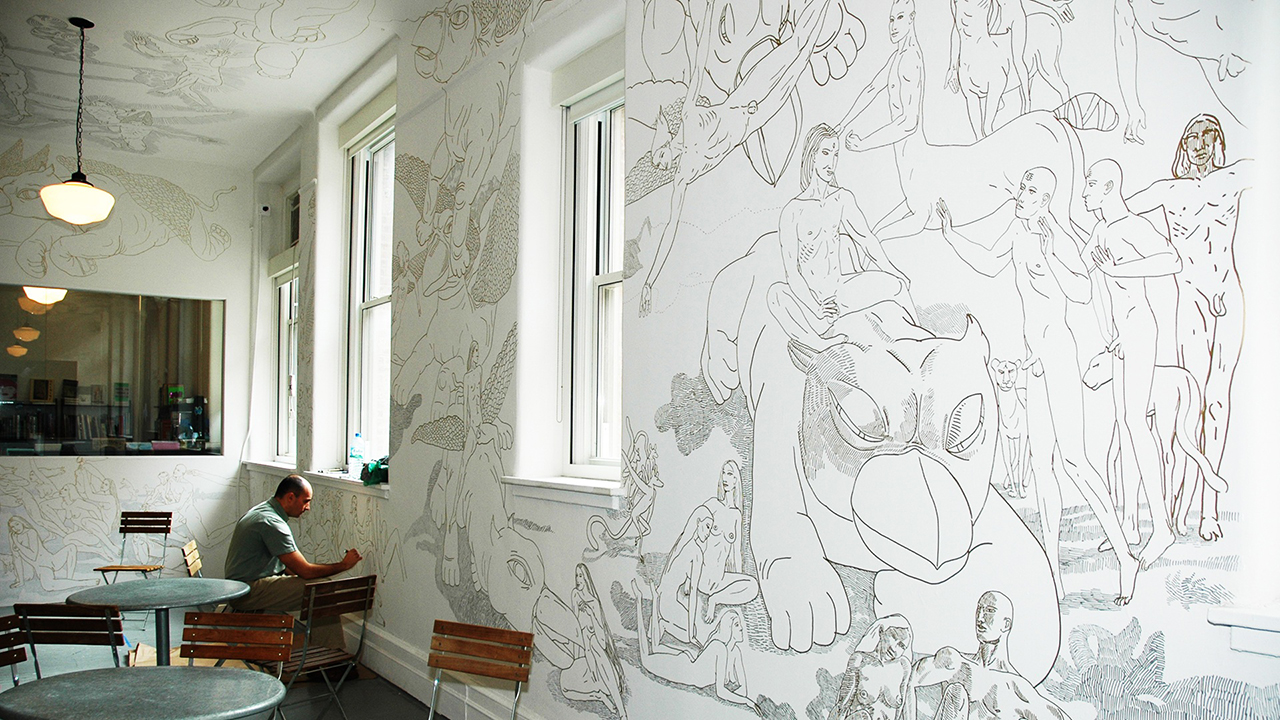
(Tomislav Buntak paints the interior of P.S.1 in M.O.M.A - N.Y.)
Tomislav Buntak is
a Croatian painter born on April 24th, 1971 in Zagreb. He graduated
from the department of Painting of the Acadamy of Fine Arts in Zagreb,
class of Miroslav Šutej, in 1997. Since 2010 he has been teaching
painting at the Acadamy of Fine Arts in Zagreb.
Even
in a very brief résumé of Buntak‘s present work, two things should be
accentuated. Primarily, not many representatives of Croatian modern art
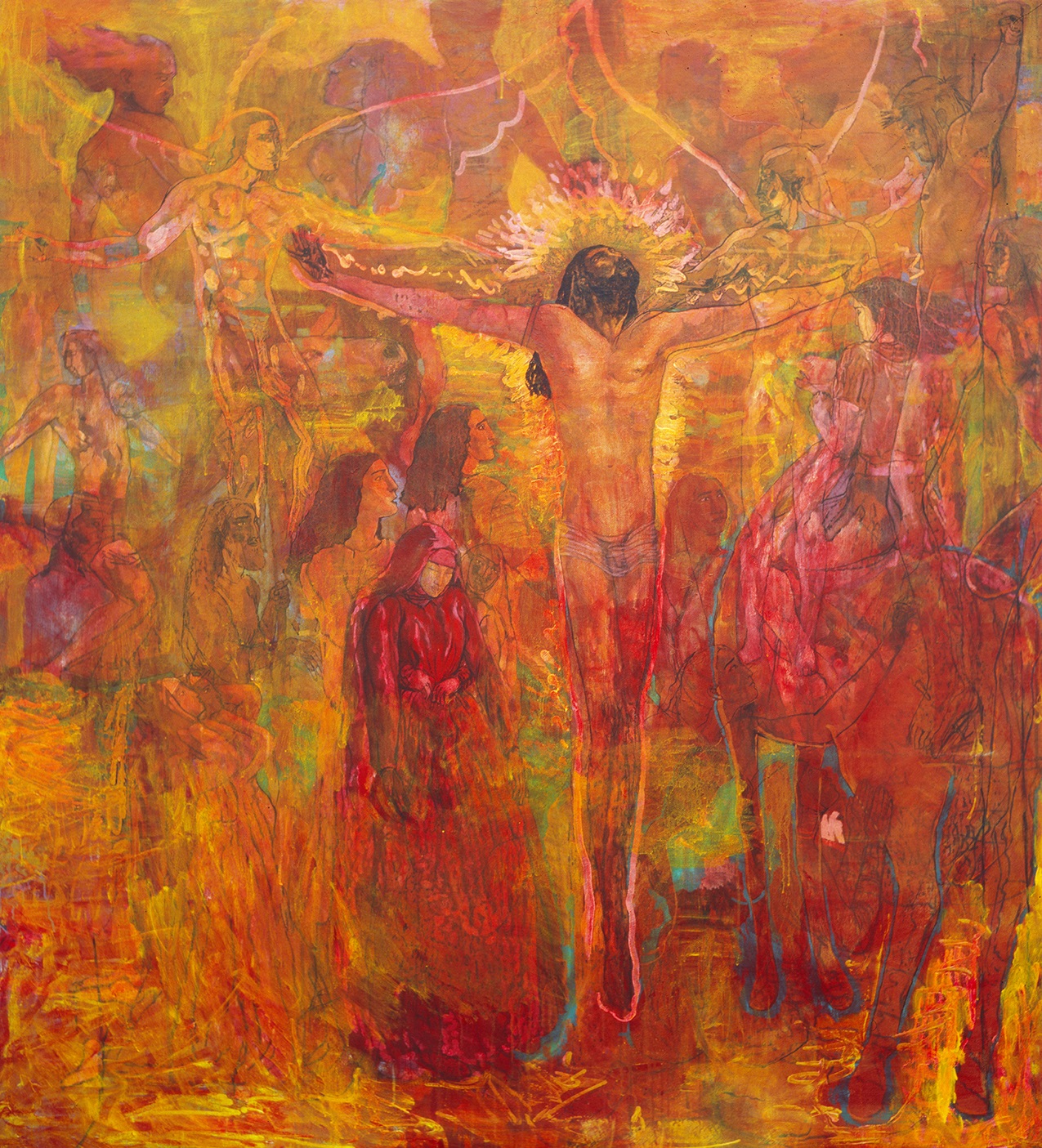
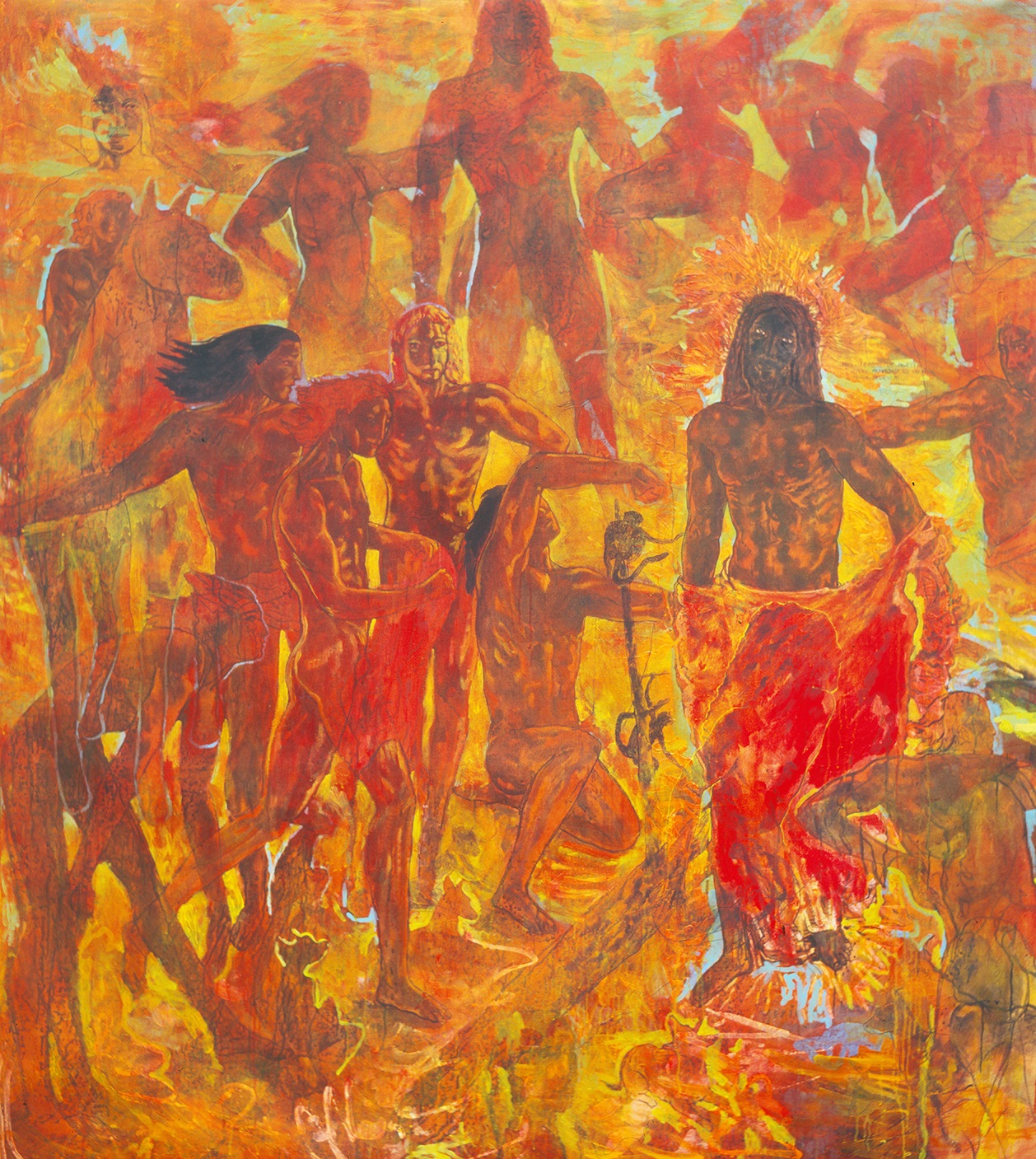
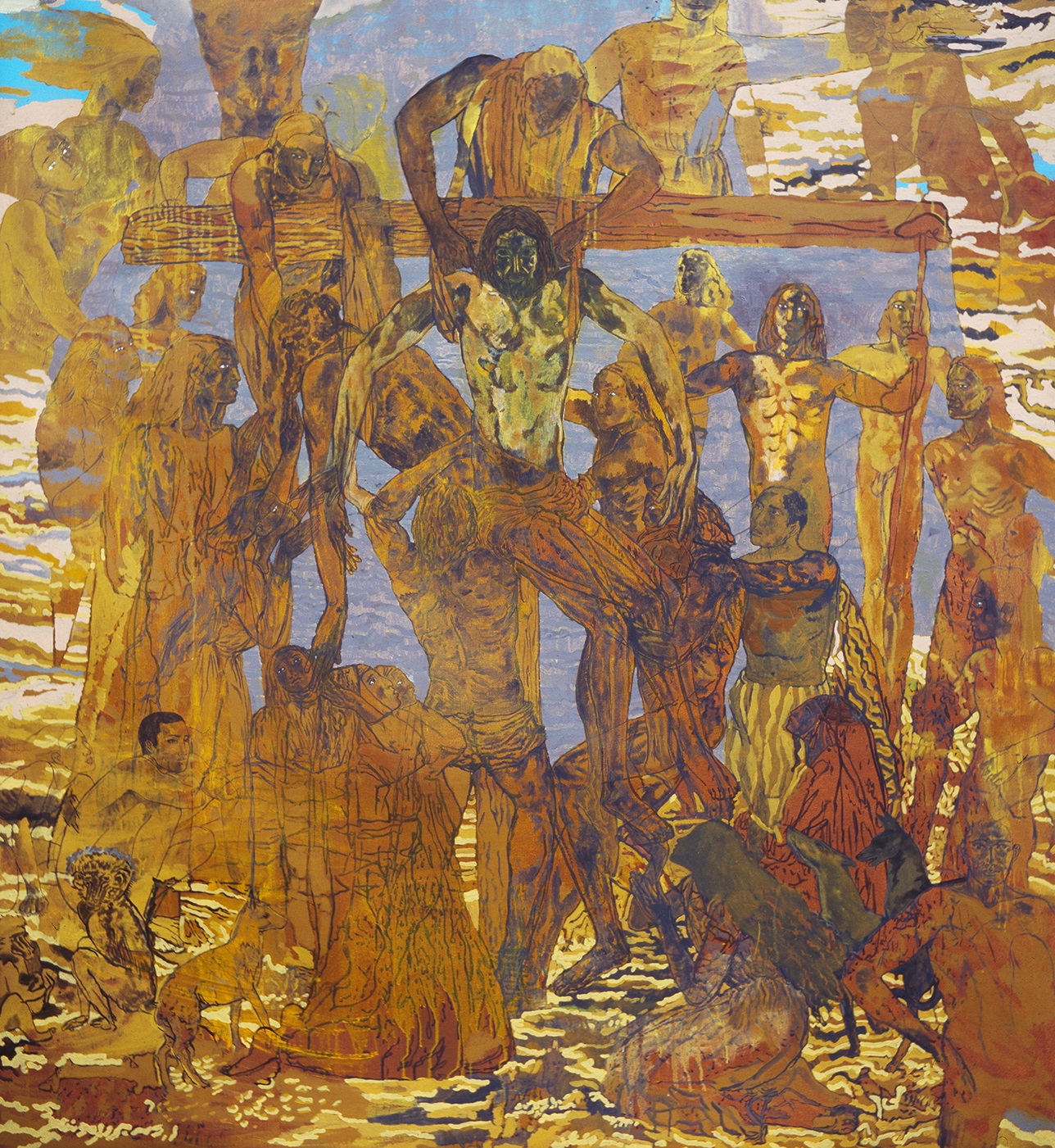
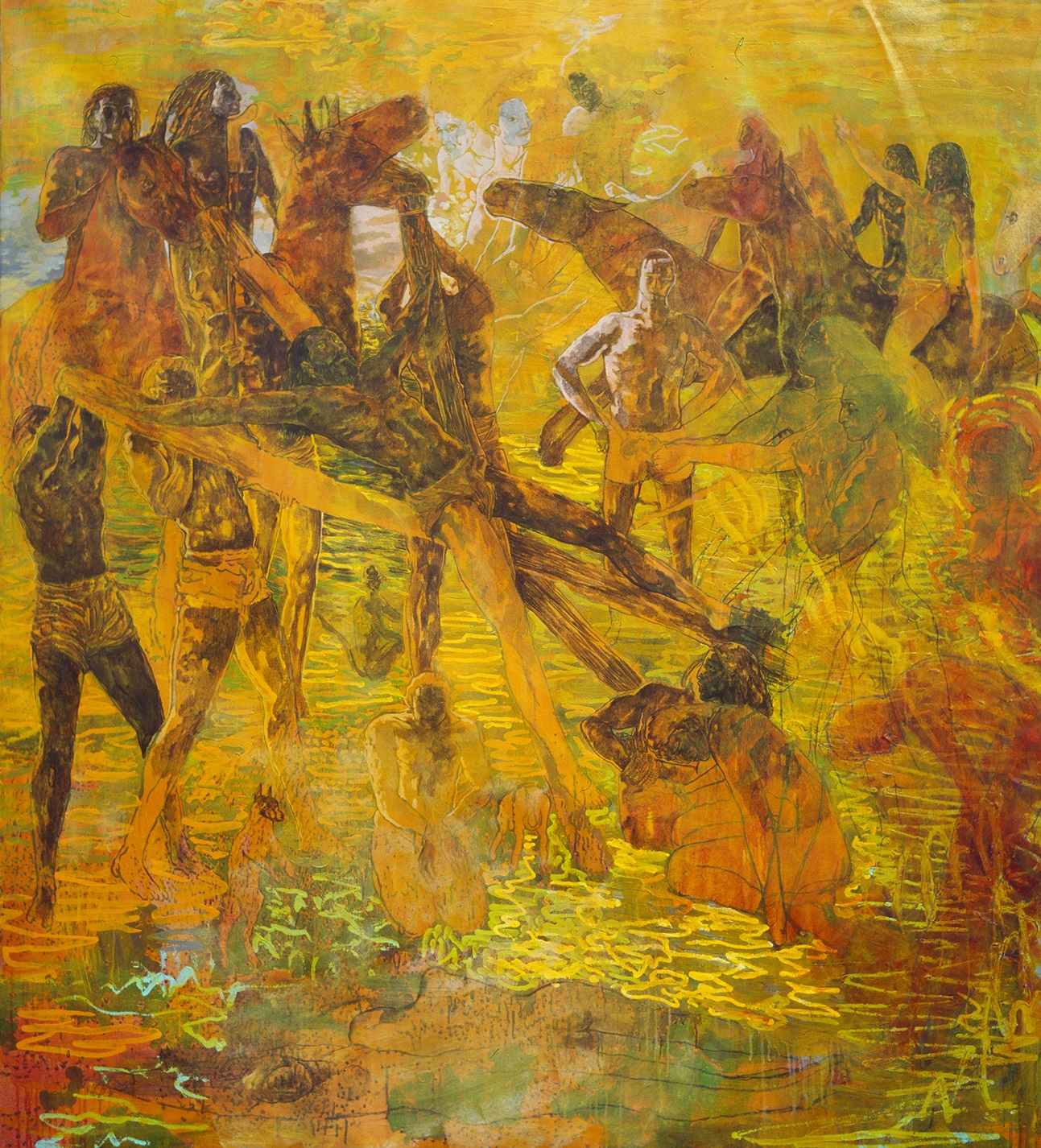
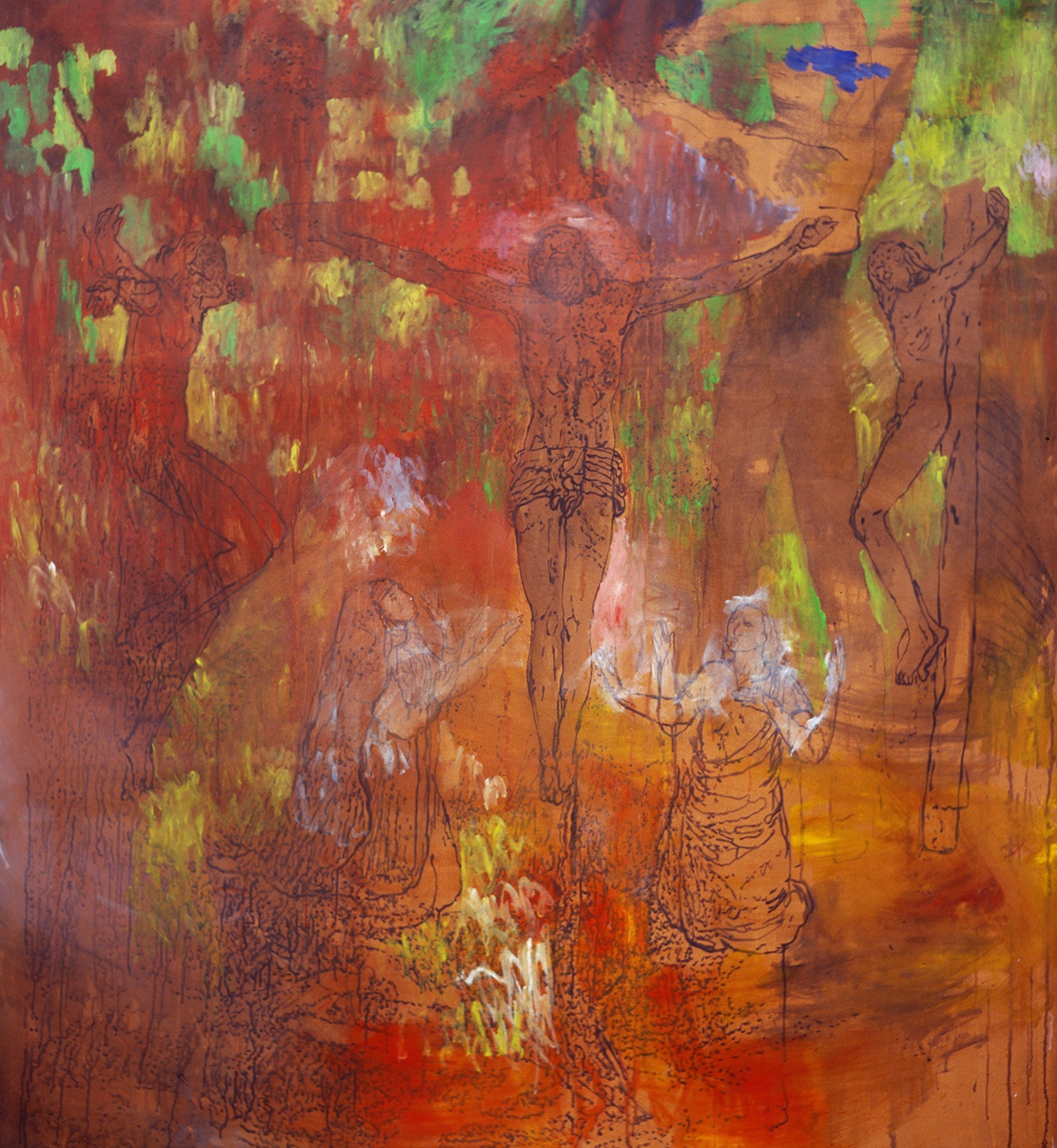
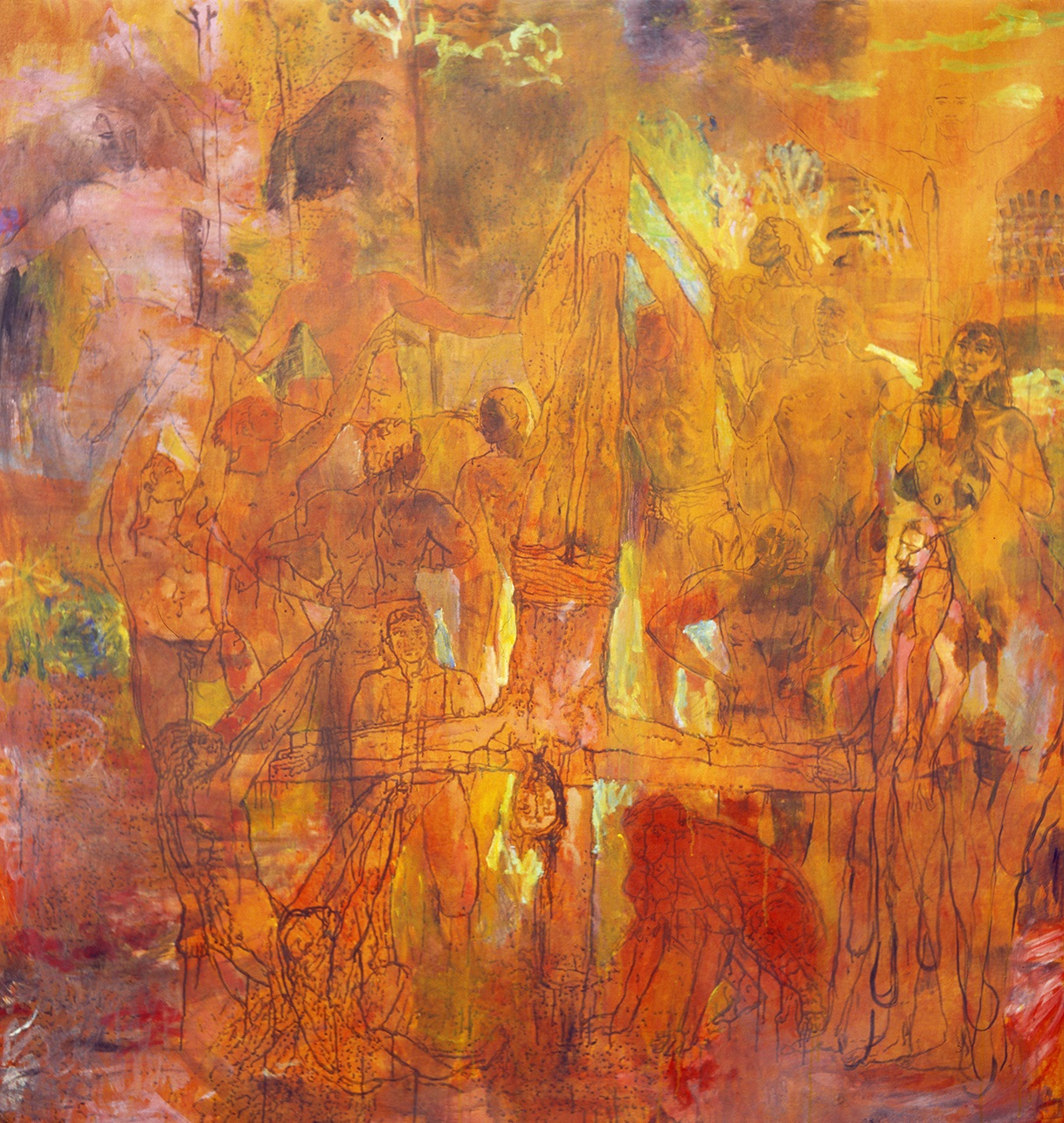
have in such a distinct manner reinterpreted the tradition of sacral
art. Employing the popular culture imaginarium in depicting Christian
topics and motives, Buntak proved that dogma is not of much use in
artistic representation. On the
other hand, in an exclusive history, not only of Croatian modern art, maybe no one has so consistently and clearly almost as in a blueprint set the motive of escapism as the main topic of his work.
other hand, in an exclusive history, not only of Croatian modern art, maybe no one has so consistently and clearly almost as in a blueprint set the motive of escapism as the main topic of his work.
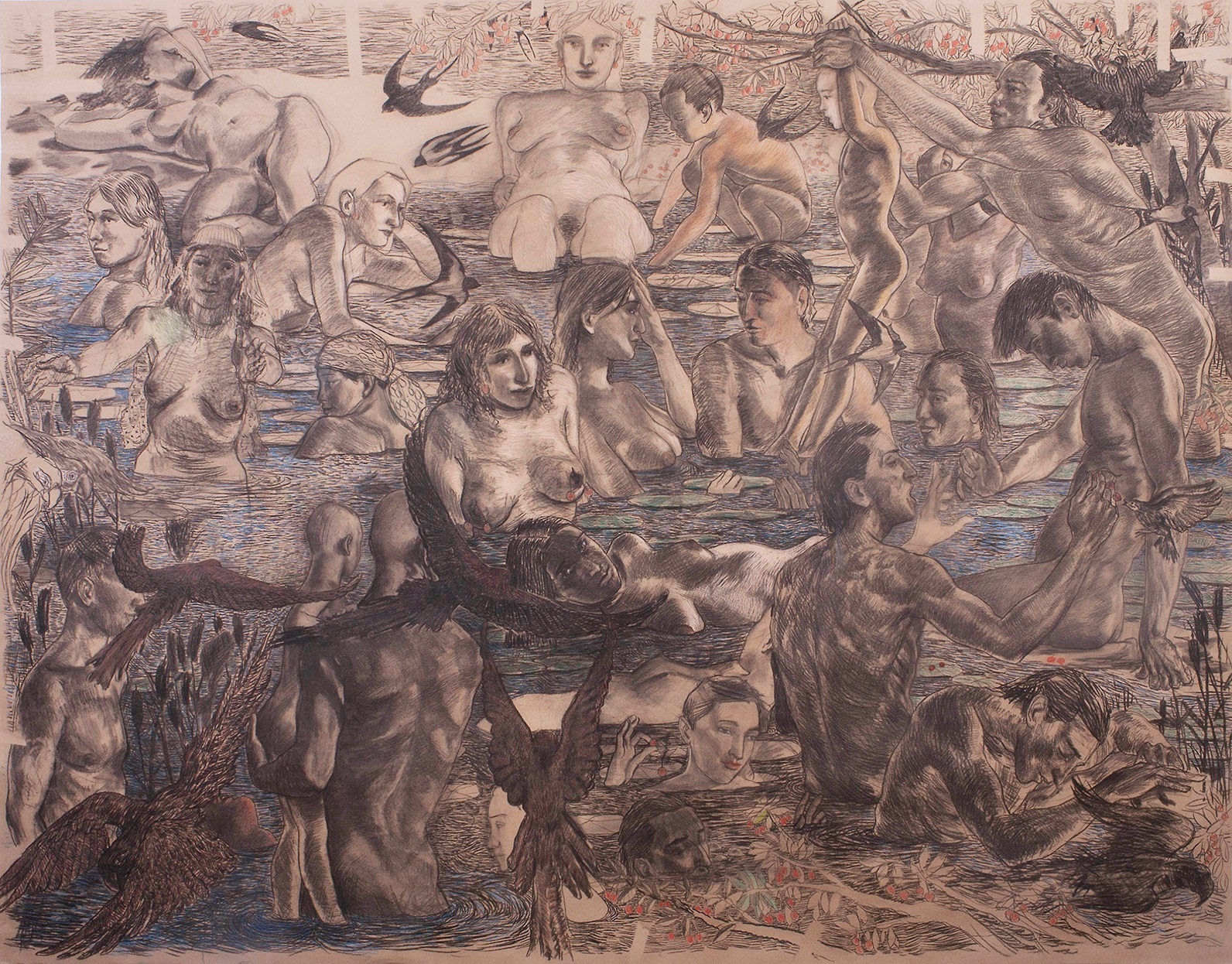
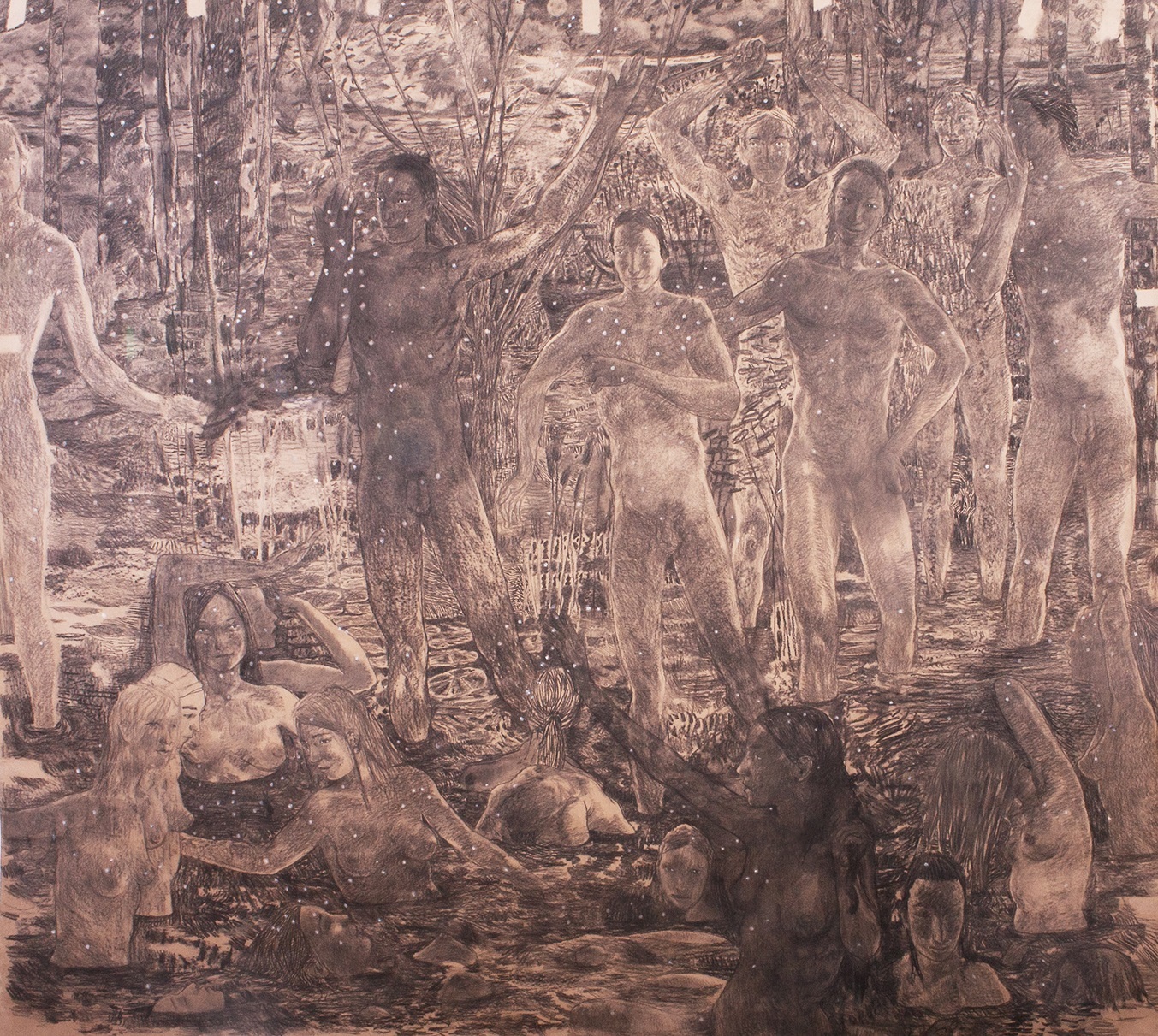
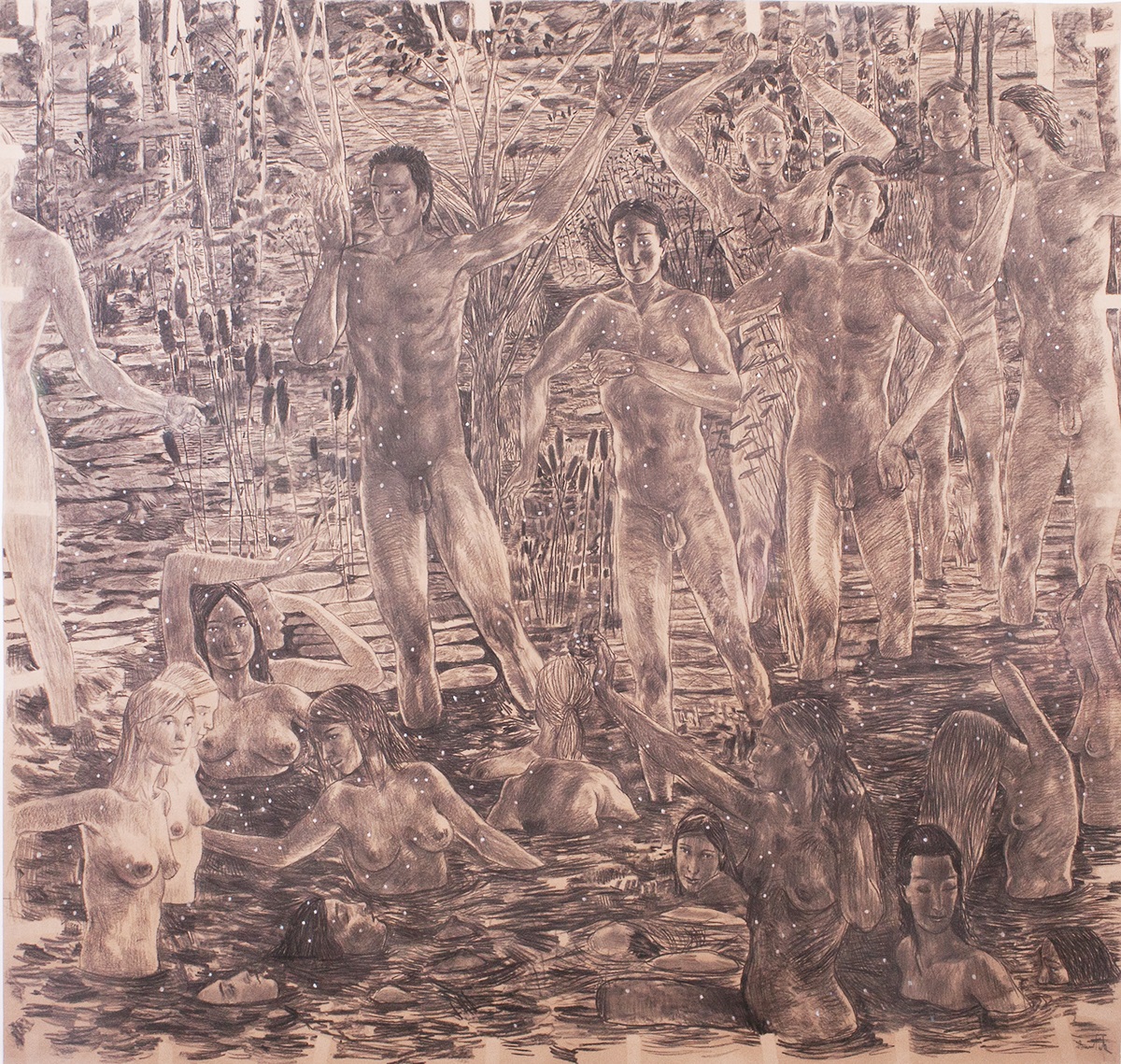
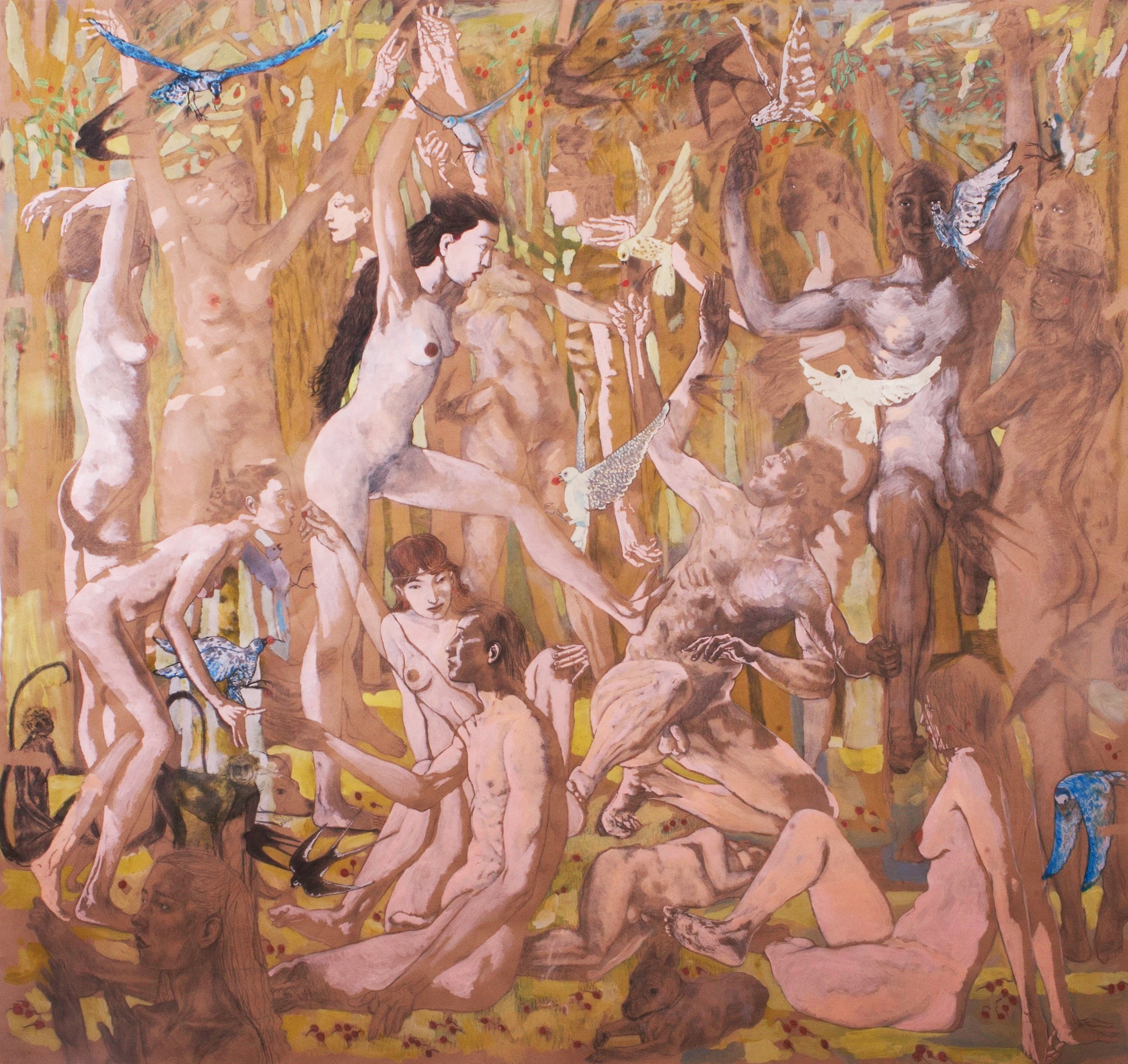
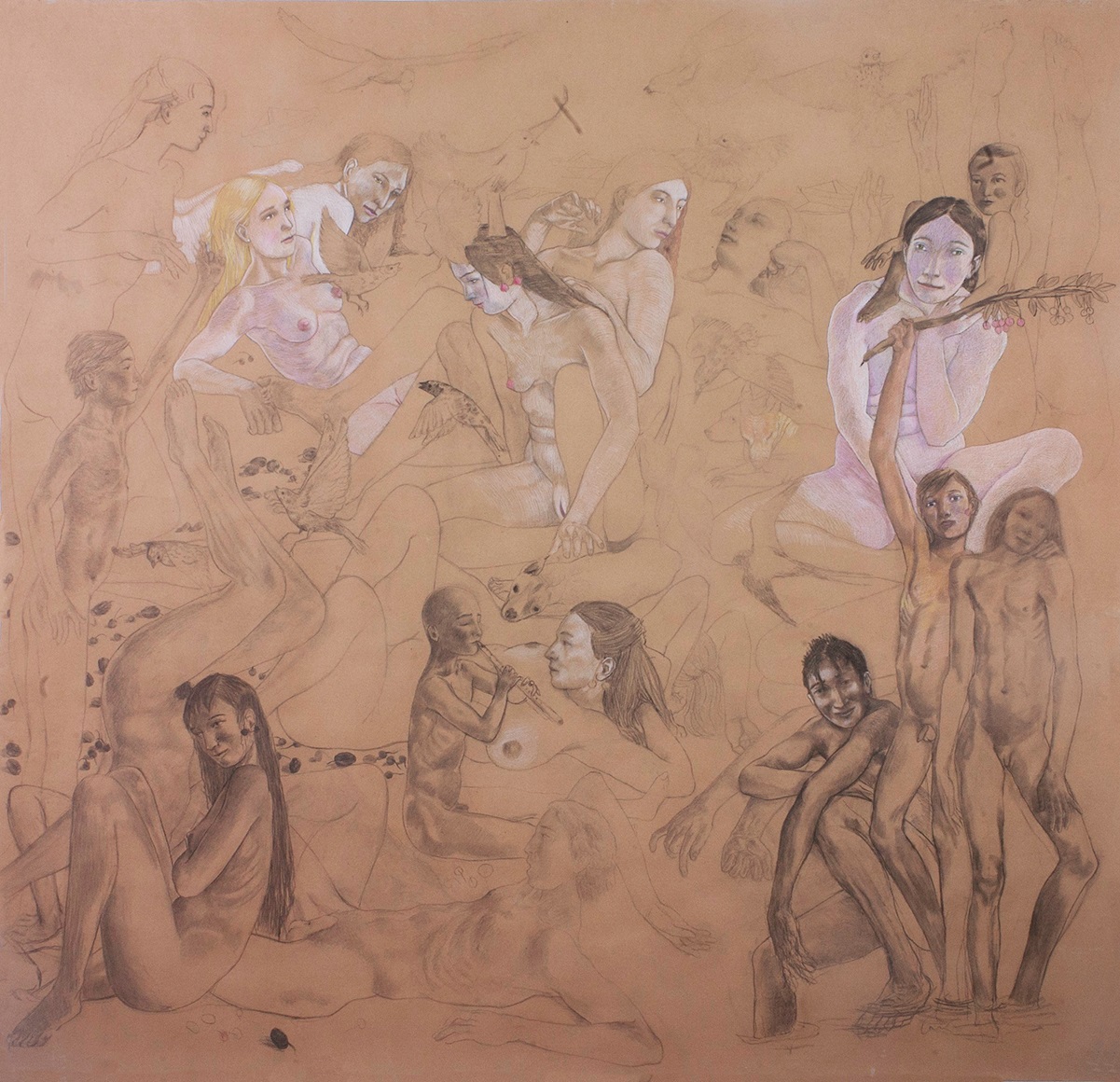
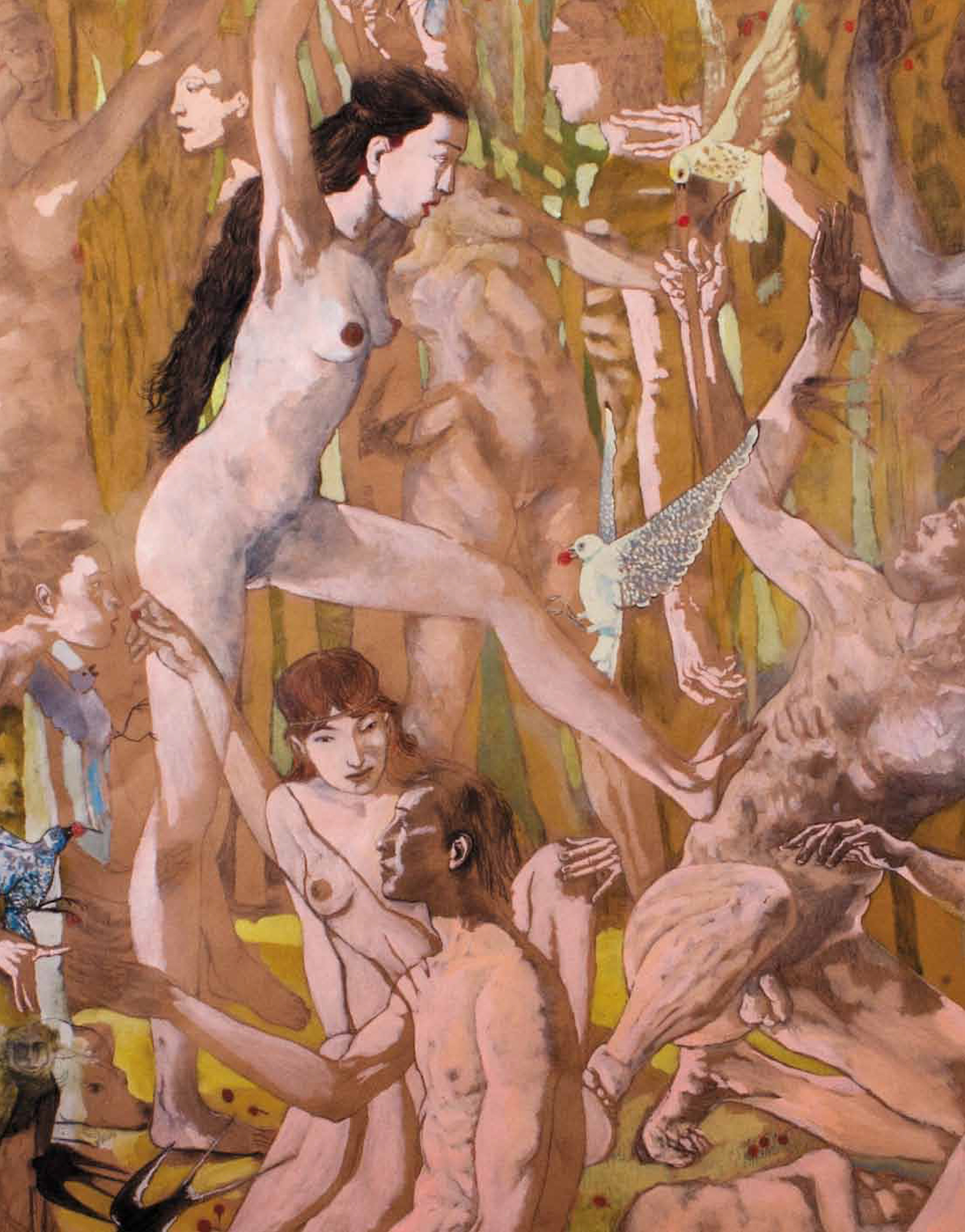
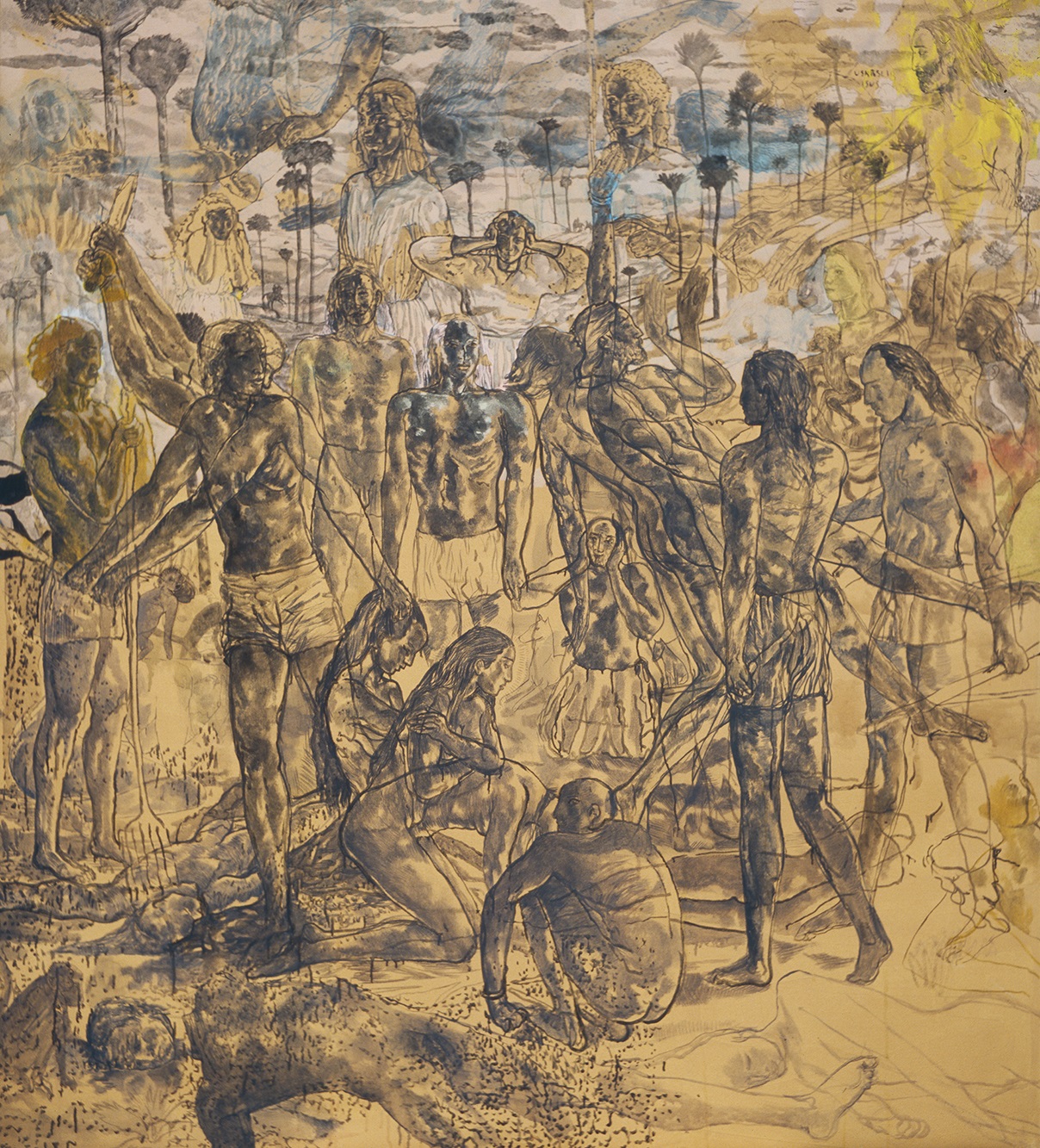
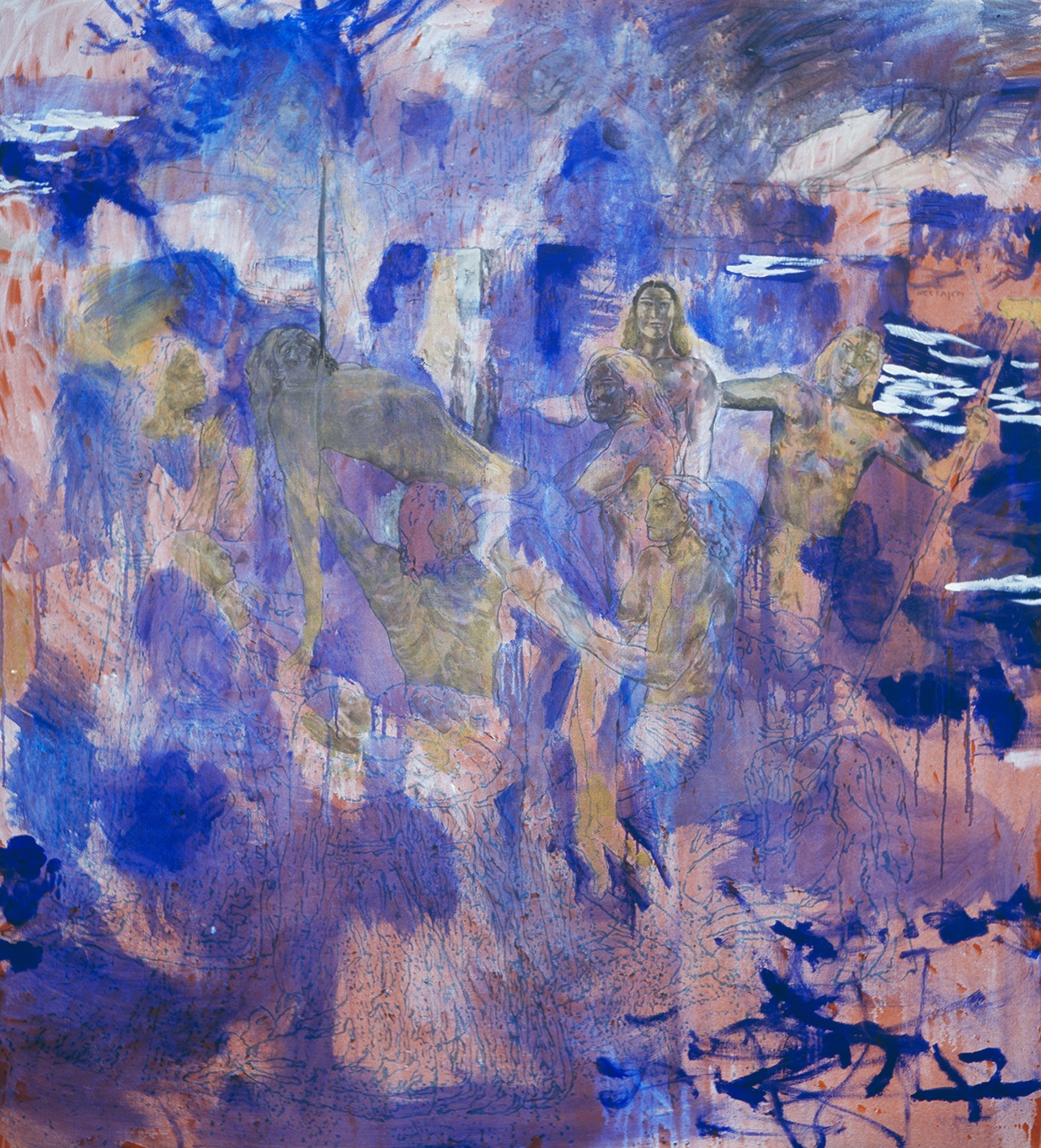
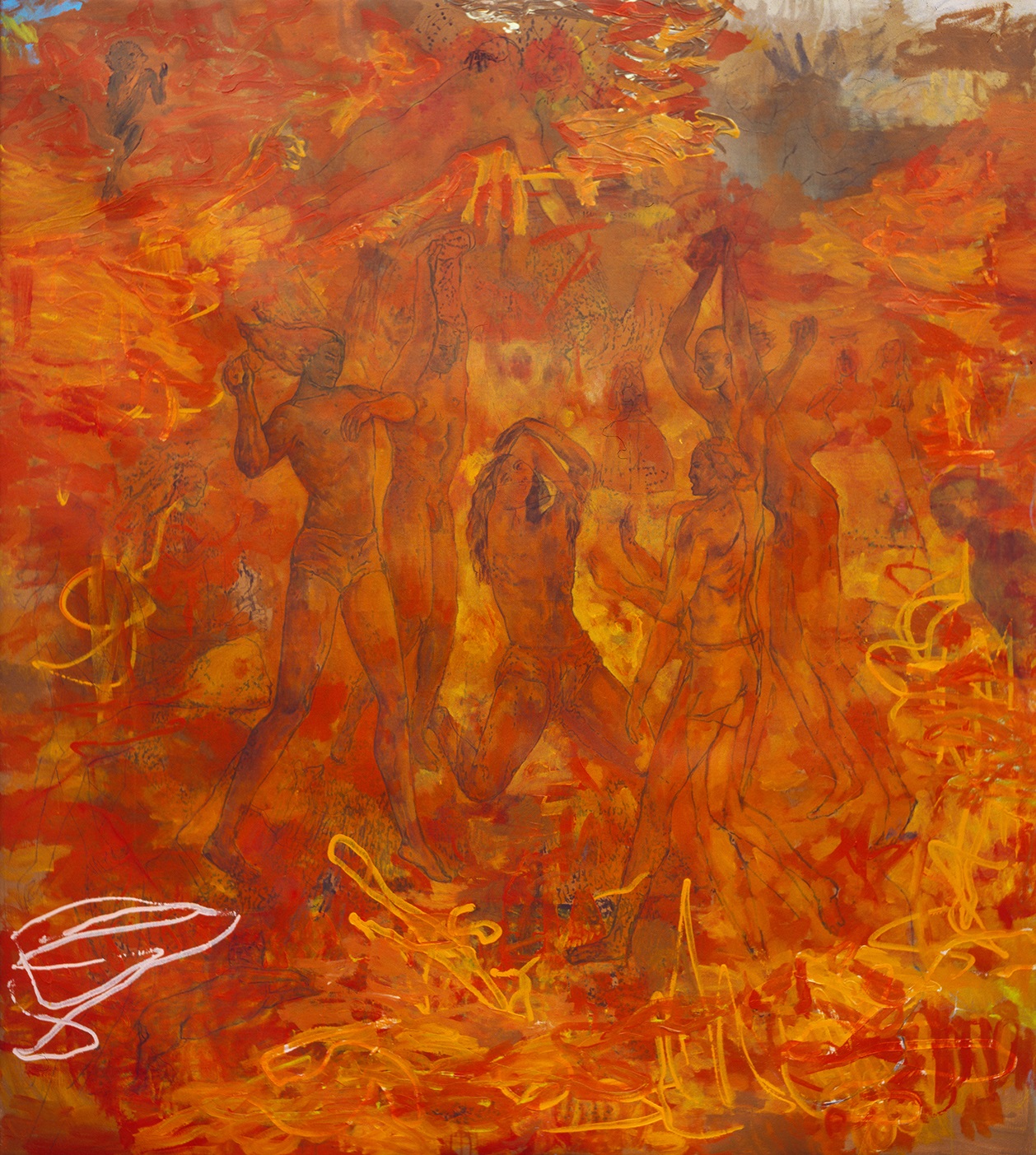
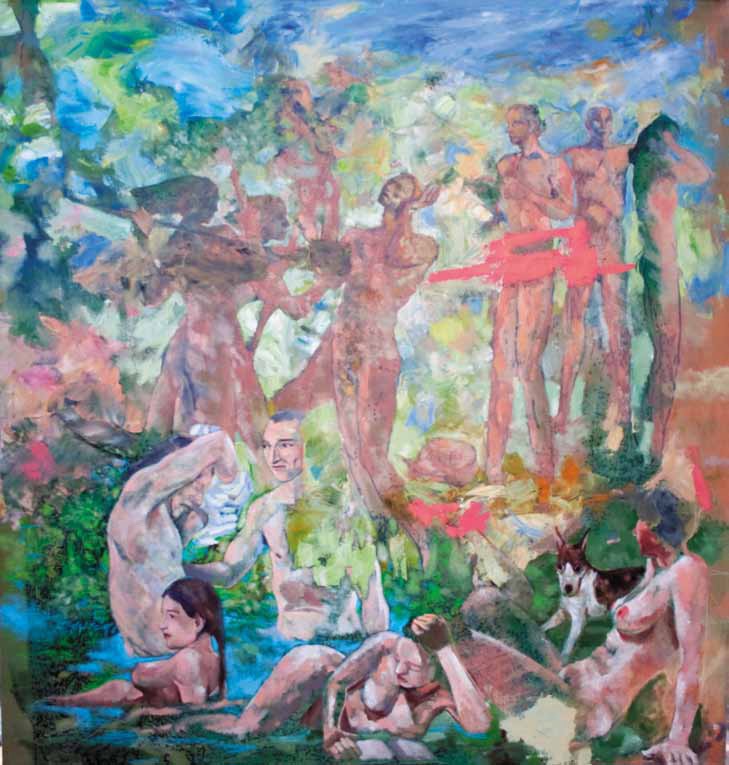
Buntak’s work portrays the possibilities of human existence –
of society as it could be. Whether dealing with a religious theme or a
more secular subject, like the celebration of May Day (International
Workers’ Day in Croatia), Buntak’s work is united by the universal motif
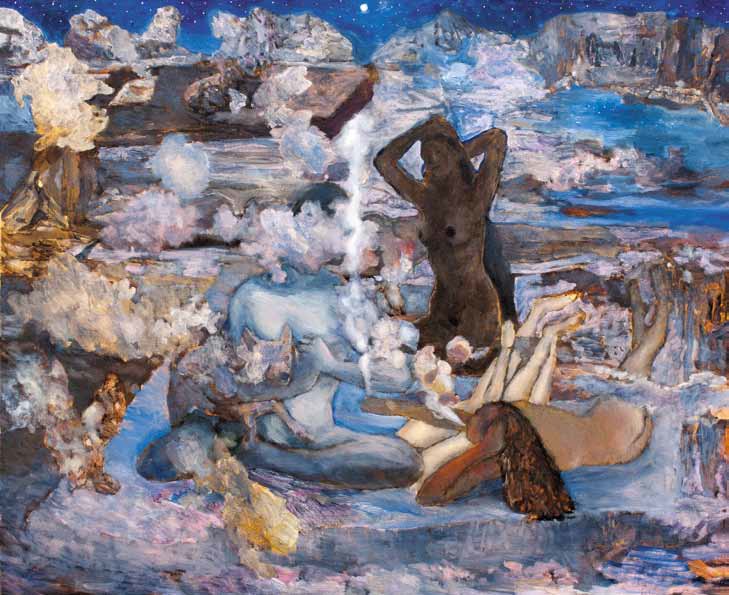
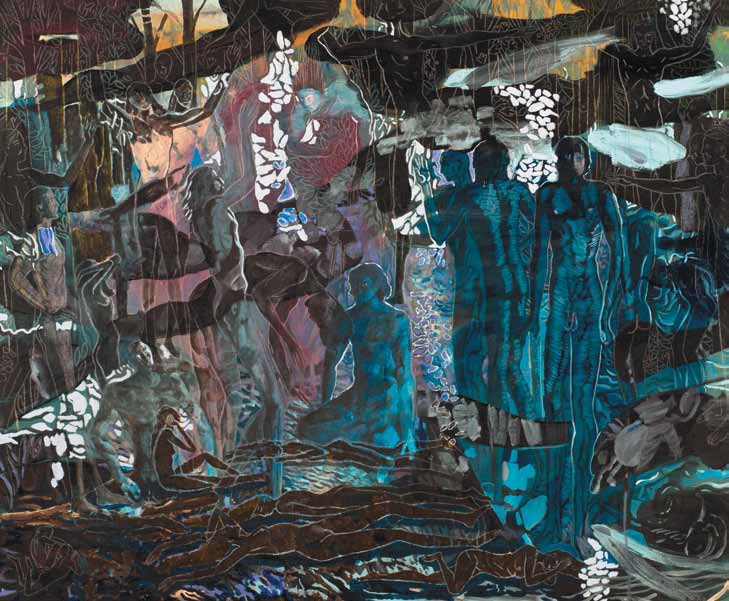
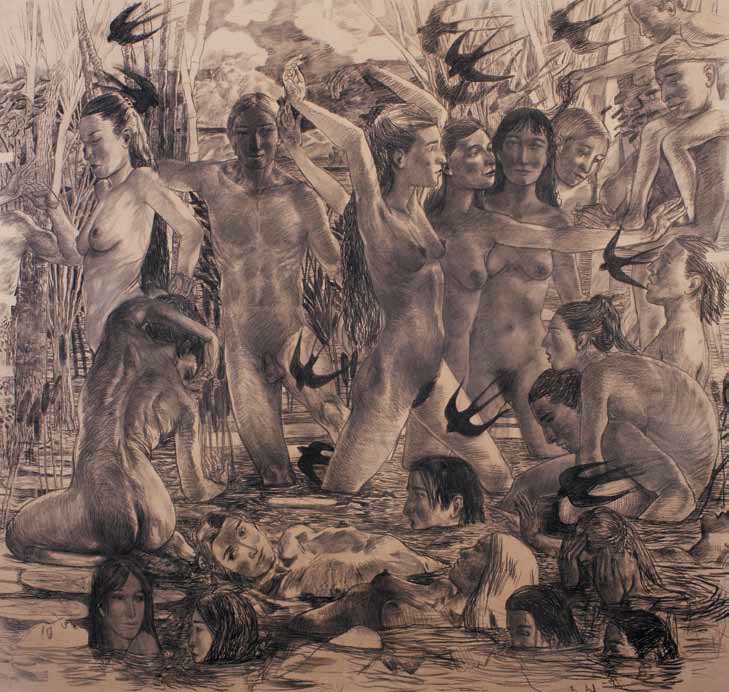
of utopia. His handling of line gives the impression of a quick sketch, of an
unfinished work, lending a certain ambiguity to his elongated figures
and a wavering sense of movement to his paintings. Lyrical and
dreamlike,
He has been exhibiting at numerous solo and group exhibitions, some of
the important ones were those in Gallery Galženica, Velika Gorica in
2000, Gallery Miroslav Kraljevic, Zagreb in 2004, MOMA P.S.1, New York
in 2005, Tokyo Wonder Site (TWS), Tokyo in 2008, Art Pavilion, Zagreb in
2008, and Spinnerei, Leipzig in 2012. Buntak has won many awards, such
as AICA Award, 39th Zagreb Salon (2005), Croatian Academy of Sciences
and Arts Award at the 4th Triennale of Drawings (2008) and Vladimir
Nazor Award for the best exhibition in 2008 (2009). Tomislav Buntak‘s
monography has been published in 2012 by Fraktura, Zagreb.
At
the moment Tomislav Buntak is a Dean of the „Academy of Fine Arts
Zagreb“ & a president of the „Croatian Society of Fine Artists“.
FROM THE PRESS :
The exhibition of Tomislav Buntak's new cycle of paintings takes place at the height of renewed confrontation of the two currents within the domestic art scene, arising from the opposed understanding of the essence of artistic practice in relation to art object. Perhaps it is necessary to remind ourselves that an entire century elapsed in ruminating on the issue, and that the avantgardistic focus on the artistic act, understanding of art as a mental process and expressing an attitude rather than achieving the standardised aesthetic result, together with the contamination of artistic disciplines and interdisciplinarity, new technologies and multimediality, were finally included into the mainstream of the art scene. The traditionalists, on the other hand, considering themselves an extension of a long line of evolution of artistic interpretation of a man's view of reality which has always, from Lascaux onwards, been concretised as an object, and actually creating an entire alternative reality based on the development of aesthetic postulates, felt somewhat neglected and shoved off to the margins of events, as much for their dedication to traditional artistic disciplines as for the vehemence of piling of "nova" in the construction of contemporary visual art systems. Nevertheless, the fact is that creation within various segments of the traditional artistic discipline has never ceased being the most supported branch of artistic creation. And although painting and traditional artistic disciplines of today may not always be intellectually too intriguing, art market, whether legal or grey as ours, and by their nature immanently conservative cultural institutions as a whole have always been more prone to them. Maybe the present polemics would not have started if widely criticised Museum of Contemporary Art was not a tad livelier than its modern counterpart Modern Gallery, that is, if a developed cultural dialogue between them existed.
(Ziher)
Precisely the successful career of Tomislav Buntak, one of the most prominent painters of his generation who, for all that, using an unorthodox approach to the medium, ranging from an artistic book to a mural, often knew how to intrigue even the professionals otherwise uninterested in traditional idioms, may serve as an excellent example supporting my thesis. His career of a painter who appeared on the art scene in the beginning of the nineties, marked by our war and a global theoretical-critical discourse on the death of painting, developed unhindered through critically acclaimed results and high media visibility to the present level of his social influence.
(Comparative literature and Art history)
Returning to the topic of storytelling and Sceherazade, the cycle is spontaneously divided into day and night section. The day section colour gamut is bright, light and dynamic, and the night is of a darker shade, more sensual in aura and métier. This clear division of the cycle and the awareness of converting the day into night, conscious into subconscious, fiction into reality and back, besides the apparent cosmic symbolism, points to the author's virtue of equal validation of everything that takes place under the vault of heaven, of all cultural paradigms, high and popular culture motives, scenes from literature, everyday life or dreams. Everyone who is familiar with Buntak's modus operandi knows of the sketching blocks and his habit of drawing the scenes that capture him, whether as scenes taking place at that very moment, or as formal practice of a more demanding pose, detail or situation. Buntak's compositions are most often created as collages of those sketches, so the motives are often transposed from one art work to another, from cycle to cycle, always incorporated in a new scene or a new story. The tendency to self-reference, to use cultural models taken from the global repertoire of visual notions and to photographically mediate the scenes from everyday life makes Buntak a true postmodern artist, and the same can be ascribed to the style characteristics of his opus. His idiom is closest to vernacular painting, to its monodimensionality, uneven style treatment of different segments of a painting, its freshness, charm and immediateness. This is the art the purpose of which is exhausted in a constantly renewed pleasure of creation, in working with material, its colour, smell and texture. This pleasure is further transferred to beholders as some sort of life force, while their gazes wonder in order to soak in, and their minds to encompass the complete visual richness of each of the paintings. Debates and arguments aside, should we really ask for more from creation, disregarding the form it transpires to us?
(Branko Franceschi)
The exhibition of Tomislav Buntak's new cycle of paintings takes place at the height of renewed confrontation of the two currents within the domestic art scene, arising from the opposed understanding of the essence of artistic practice in relation to art object. Perhaps it is necessary to remind ourselves that an entire century elapsed in ruminating on the issue, and that the avantgardistic focus on the artistic act, understanding of art as a mental process and expressing an attitude rather than achieving the standardised aesthetic result, together with the contamination of artistic disciplines and interdisciplinarity, new technologies and multimediality, were finally included into the mainstream of the art scene. The traditionalists, on the other hand, considering themselves an extension of a long line of evolution of artistic interpretation of a man's view of reality which has always, from Lascaux onwards, been concretised as an object, and actually creating an entire alternative reality based on the development of aesthetic postulates, felt somewhat neglected and shoved off to the margins of events, as much for their dedication to traditional artistic disciplines as for the vehemence of piling of "nova" in the construction of contemporary visual art systems. Nevertheless, the fact is that creation within various segments of the traditional artistic discipline has never ceased being the most supported branch of artistic creation. And although painting and traditional artistic disciplines of today may not always be intellectually too intriguing, art market, whether legal or grey as ours, and by their nature immanently conservative cultural institutions as a whole have always been more prone to them. Maybe the present polemics would not have started if widely criticised Museum of Contemporary Art was not a tad livelier than its modern counterpart Modern Gallery, that is, if a developed cultural dialogue between them existed.
(Ziher)
Precisely the successful career of Tomislav Buntak, one of the most prominent painters of his generation who, for all that, using an unorthodox approach to the medium, ranging from an artistic book to a mural, often knew how to intrigue even the professionals otherwise uninterested in traditional idioms, may serve as an excellent example supporting my thesis. His career of a painter who appeared on the art scene in the beginning of the nineties, marked by our war and a global theoretical-critical discourse on the death of painting, developed unhindered through critically acclaimed results and high media visibility to the present level of his social influence.
(Comparative literature and Art history)
Returning to the topic of storytelling and Sceherazade, the cycle is spontaneously divided into day and night section. The day section colour gamut is bright, light and dynamic, and the night is of a darker shade, more sensual in aura and métier. This clear division of the cycle and the awareness of converting the day into night, conscious into subconscious, fiction into reality and back, besides the apparent cosmic symbolism, points to the author's virtue of equal validation of everything that takes place under the vault of heaven, of all cultural paradigms, high and popular culture motives, scenes from literature, everyday life or dreams. Everyone who is familiar with Buntak's modus operandi knows of the sketching blocks and his habit of drawing the scenes that capture him, whether as scenes taking place at that very moment, or as formal practice of a more demanding pose, detail or situation. Buntak's compositions are most often created as collages of those sketches, so the motives are often transposed from one art work to another, from cycle to cycle, always incorporated in a new scene or a new story. The tendency to self-reference, to use cultural models taken from the global repertoire of visual notions and to photographically mediate the scenes from everyday life makes Buntak a true postmodern artist, and the same can be ascribed to the style characteristics of his opus. His idiom is closest to vernacular painting, to its monodimensionality, uneven style treatment of different segments of a painting, its freshness, charm and immediateness. This is the art the purpose of which is exhausted in a constantly renewed pleasure of creation, in working with material, its colour, smell and texture. This pleasure is further transferred to beholders as some sort of life force, while their gazes wonder in order to soak in, and their minds to encompass the complete visual richness of each of the paintings. Debates and arguments aside, should we really ask for more from creation, disregarding the form it transpires to us?
(Branko Franceschi)
EXHIBITIONS / SMALL SELECTION :
2014 Velika gorica, Galerija Galzenica
2013 Slovenija, Kostanjevica ob Krki, Galerija Bozidar Jakac
2012 Zagreb, Rock star cafe
2011 Split, Galerija Kula
2009 Zagreb, Galerija Kranjchar, Jesu fons amoris aeterni et veritatis
2006 Zagreb, Mimara, Muka i mučenici
2005 P.S.1, New York, Residential
2013 Slovenija, Kostanjevica ob Krki, Galerija Bozidar Jakac
2012 Zagreb, Rock star cafe
2011 Split, Galerija Kula
2009 Zagreb, Galerija Kranjchar, Jesu fons amoris aeterni et veritatis
2006 Zagreb, Mimara, Muka i mučenici
2005 P.S.1, New York, Residential
( Price range: 24 000 - 180 000 $ )
Additional Images